
Contraception Guide – Methods, How They Work, and How to Choose
Contraception Guide – Methods, How They Work, and How to Choose
Understanding your contraception options is straightforwardly useful, regardless of where you are in your sexual life. This guide covers the main methods, how effective each is, and what the practical trade-offs are. It’s an overview, not medical advice – a GP or sexual health clinic is the right place for personalised guidance on what works for your specific health circumstances.
Condoms
Condoms – male (external) and female (internal) – are the only contraception method that also provides significant protection against sexually transmitted infections. Everything else on this list prevents pregnancy but not STIs. That distinction matters.
Male condoms are worn over the penis before any genital contact and act as a physical barrier preventing sperm from reaching the egg. When used correctly and consistently, they’re around 98% effective at preventing pregnancy. Real-world effectiveness is somewhat lower (around 85%) because of inconsistent or incorrect use.
Female condoms are inserted into the vagina before sex. Effectiveness is comparable to male condoms when used correctly. They’re particularly useful when a male partner won’t or can’t use a condom.
Condoms are available in latex and non-latex versions. People with latex allergies should use polyurethane or polyisoprene alternatives, which are equally effective.
The Combined Contraceptive Pill
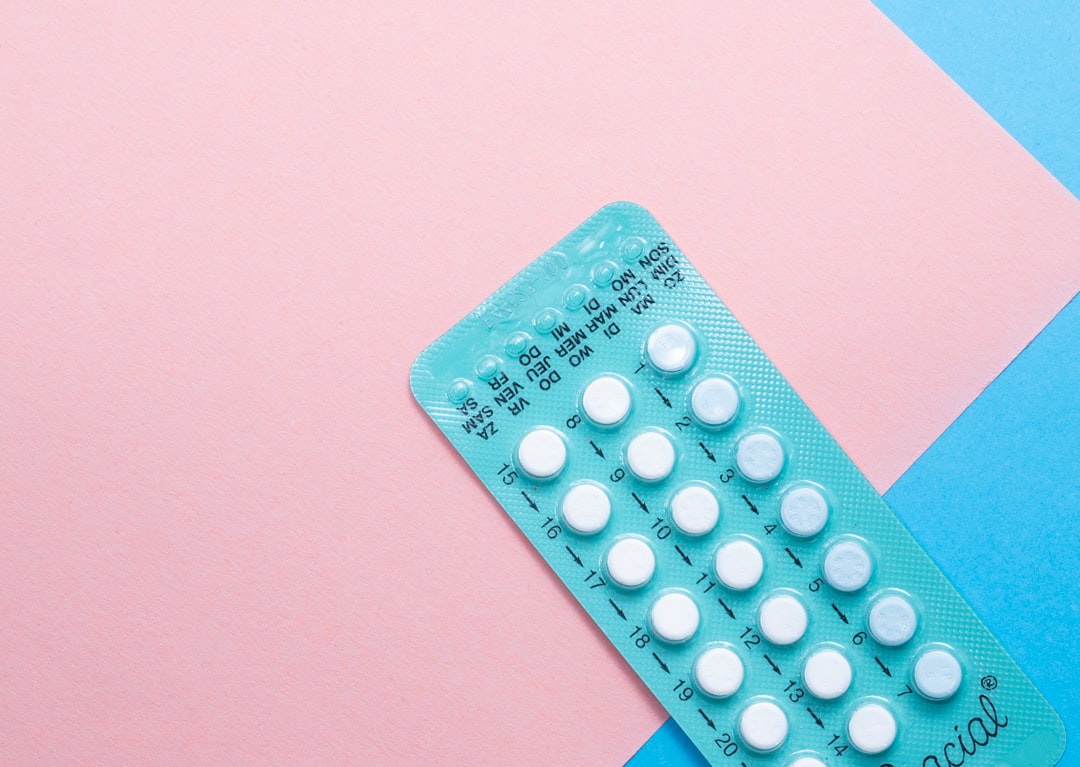
The combined oral contraceptive pill (COCP) contains synthetic oestrogen and progestogen. Taken daily, it prevents ovulation and makes the uterine environment less hospitable to fertilisation. When taken consistently, it’s over 99% effective at preventing pregnancy.
It doesn’t protect against STIs. It can also cause side effects in some people – mood changes, altered libido, nausea – that make it unsuitable. It’s not recommended for people with certain health conditions including a history of blood clots, some types of migraine, or elevated blood pressure. These are the conversations to have with a GP before starting.
One practical consideration: the pill must be taken at roughly the same time every day. Missing pills reduces effectiveness significantly.
The Mini-Pill (Progestogen-Only Pill)
The progestogen-only pill (POP) works primarily by thickening cervical mucus rather than preventing ovulation. It’s suitable for people who can’t take oestrogen – including smokers over 35, people with certain migraines, and those with some cardiovascular risk factors. Effectiveness is comparable to the combined pill when taken consistently, but the timing window is stricter – some formulations require taking it within a three-hour window daily.
Long-Acting Reversible Contraception (LARCs)
LARCs are the most effective contraception methods available, with effectiveness rates of over 99% because they don’t depend on daily action by the user.
The intrauterine device (IUD, or coil) fits inside the uterus and works by preventing sperm from fertilising eggs – either through copper (which is toxic to sperm) or hormones (which thin the uterine lining). Copper IUDs are non-hormonal and last up to ten years; hormonal coils (IUS) last three to five years depending on the type. Fitting requires a short appointment with a healthcare provider and can be briefly uncomfortable; after fitting, most people are barely aware of it.
The contraceptive implant is a small rod inserted under the skin of the upper arm, releasing progestogen continuously. It lasts three years, requires no daily action, and is reversible – once removed, fertility returns promptly. The insertion procedure is done under local anaesthetic.
The Contraceptive Injection
The injection (Depo-Provera) is given every eight to thirteen weeks depending on the formulation, and provides highly effective contraceptive protection during that period. It’s a practical option for people who find daily pills difficult to manage consistently. The trade-off is that once injected, it can’t be removed – if side effects occur, you wait for them to pass. Fertility can also take several months to return after stopping, which matters if you’re planning to conceive in the near term.
Emergency Contraception
Emergency contraception is not a routine method – it’s a backup for situations where regular contraception has failed or wasn’t used. The morning-after pill (levonorgestrel, sold as Levonelle) works best when taken within 72 hours of unprotected sex; ellaOne is effective up to 120 hours. A copper IUD fitted within 5 days of unprotected sex is the most effective emergency contraception option available. All of these are available without a prescription from pharmacies.